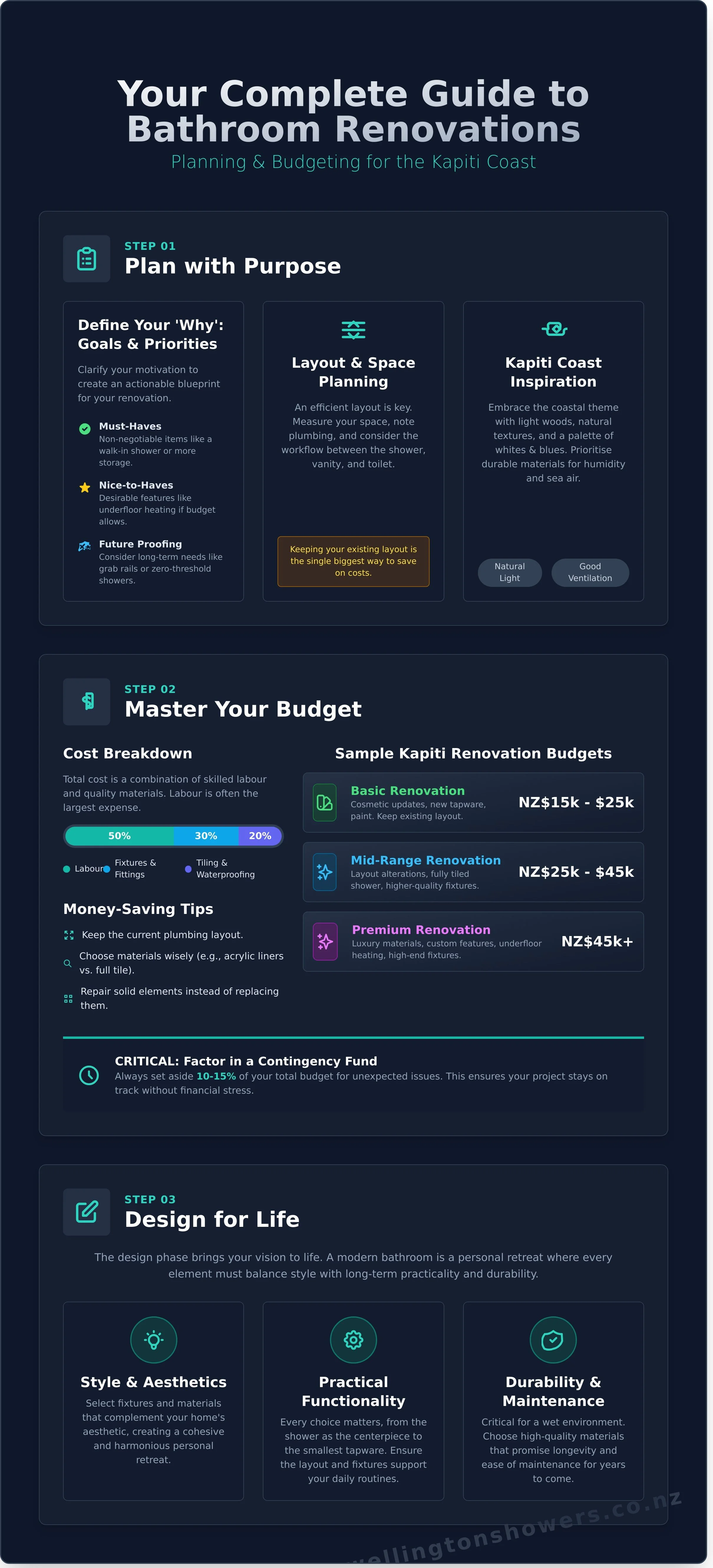
Your expert guide to planning, budgeting, and executing a beautiful bathroom renovation in Wellington, ensuring a stress-free process from start to finish.
A bathroom renovation is one of the most rewarding home improvement projects you can undertake. It not only enhances your daily routine but also adds significant value to your property. However, the process can feel overwhelming, from setting a budget to choosing fixtures and coordinating tradespeople. This guide breaks down the entire process into five manageable steps, providing the clarity and confidence you need to create your dream bathroom in Wellington.
Step 1: Planning Your Wellington Bathroom Renovation
Solid planning is the foundation of a successful and stress-free renovation. Before you pick up a single tile or look at a tap, taking the time to define your goals and understand your space will save you time, money, and headaches down the line.
Defining Your 'Why': Goals & Priorities
First, clarify the primary reason for your renovation. Is it to accommodate a growing family, update a dated style, fix persistent issues like leaks or poor ventilation, or increase your home's resale value?
List the top three things you want to change about your current bathroom. Then, create two columns: 'must-haves' and 'nice-to-haves'. A 'must-have' might be a new waterproof shower system, while a 'nice-to-have' could be a heated towel rail. This exercise helps you prioritise where to allocate your budget when making decisions.
Layout and Space Planning
Next, assess your bathroom's layout. Measure the room accurately, noting the current locations of the toilet, shower, and vanity. Consider the workflow—is the space easy to move around in? Are there any functional flaws, like a door that bumps into the vanity?
Decide if you want to change the layout. Moving plumbing and waste pipes adds significant cost, but it can dramatically improve functionality. If you're on a tighter budget, working with the existing plumbing footprint is the most cost-effective approach.
Finding Inspiration for Wellington Homes
Gather inspiration that suits your home's character and Wellington's unique environment. Create a mood board using images from magazines, Pinterest, or local design blogs. Consider styles that complement Wellington architecture, from classic villas to modern apartments.
Coastal & Contemporary: Embrace light woods, soft blues, and crisp whites to create a bright, airy feel.
Durable Materials: Given Wellington's coastal air in many suburbs, choose materials and finishes (like 316 marine-grade stainless steel) that resist corrosion.
Light & Ventilation: Maximise natural light where possible and plan for excellent mechanical ventilation to combat moisture.
Step 2: Budgeting for Your Renovation in Wellington
Understanding the costs involved is crucial for a successful project. A clear budget helps you make informed decisions and prevents costs from spiralling out of control. A typical bathroom renovation involves costs for labour, materials, and a contingency fund.
Breaking Down the Costs
Labour: This is often the largest portion of the budget and includes fees for builders, plumbers, electricians, waterproofers, and tilers.
Fixtures & Fittings: This includes the big-ticket items like the shower, vanity, toilet, and tapware. Prices can vary dramatically based on brand and quality.
Finishing Materials: This covers tiles, flooring, paint, lighting, and ventilation fans.
Contingency: Always set aside an extra 10-15% of your total budget to cover unexpected issues, such as discovering rotten timber after demolition or needing unforeseen plumbing work.
Sample Budgets: Basic, Mid-Range, and Premium
While costs vary based on size, complexity, and material choices, here are some general budget ranges for a standard Wellington bathroom renovation. (Note: These are illustrative estimates and you should always get a detailed quote for your specific project).
Basic Renovation (Cosmetic Update): This typically involves replacing fixtures in the same position, a new vanity, a pre-made acrylic shower, and new vinyl or tiles. You might retain the existing layout.
Mid-Range Renovation: This allows for higher-quality fixtures, a new tiled shower, moving some plumbing, and more extensive tiling. This is the most common type of renovation.
Premium Renovation (High-End): This includes luxury materials, custom-built cabinetry, frameless glass showers, structural changes, and high-end tapware and lighting.
Tips for Saving Money Without Sacrificing Quality
Keep the Layout: Avoid moving major plumbing fixtures like the toilet and shower to save thousands on plumbing costs.
Smart Material Choices: Opt for durable and stylish yet cost-effective materials. For example, high-quality ceramic tiles can provide a premium look for a fraction of the price of natural stone.
Restore, Don't Replace: Could your existing wooden vanity be repainted? Can your tapware be professionally polished? Consider what can be salvaged before replacing everything.
Step 3: Designing Your Dream Bathroom: Styles & Fixtures
This is the creative part where your vision comes to life. The key is to balance aesthetics with practicality, creating a space that is both beautiful and highly functional for years to come.
Choosing the Perfect Shower
In any modern bathroom, the shower is the undisputed centrepiece. It's the most-used feature and its quality directly impacts your daily experience and your home's long-term health. Getting the shower right is non-negotiable.
Frameless Glass Showers: These offer a sleek, minimalist look that makes a bathroom feel larger and more open. They are a premium choice that adds significant visual appeal.
Acrylic Wall Liners: For homeowners prioritising low maintenance, a high-quality acrylic shower is an excellent choice. They are seamless, easy to clean, and come in various modern styles.
Tiled Showers: Tiled showers provide complete design freedom, allowing for custom sizes, built-in niches, and unique patterns. However, they demand expert waterproofing and installation to prevent leaks.
Choosing and installing a shower is a specialist task. Get expert advice on the right shower for your space.
Vanities, Toilets, and Tapware
Select fixtures that create a cohesive look. Wall-hung vanities are a popular choice in smaller Wellington bathrooms as they create an illusion of space by showing more floor area. When choosing a toilet, consider a model with a high water-efficiency rating to save on bills. For tapware, match the finish across your shower mixer, basin tap, and accessories—popular choices include chrome, matte black, and brushed nickel.
Flooring, Lighting, and Ventilation
Functionality and safety are paramount here. Choose non-slip floor tiles to prevent accidents in a wet environment. A layered lighting plan is most effective, incorporating bright task lighting at the vanity, ambient overhead lighting, and perhaps accent lighting for features. Finally, an efficient, high-capacity extractor fan is essential in all New Zealand homes to manage steam and prevent mould growth.
Step 4: The Renovation Process: What to Expect
Once the planning and design are complete, the physical work begins. A typical bathroom renovation follows a clear sequence of stages. Understanding this process helps you know what to expect and ensures you can prepare for the temporary disruption.
Demolition and Preparation
The first stage involves carefully removing all old fixtures, linings, flooring, and tiles. This is followed by the 'rough-in' phase, where plumbers and electricians run new pipes and wiring within the walls before they are closed up. If your new layout requires it, any structural changes to the framing will happen now.
Installation and Finishing
This is where the new bathroom takes shape. The most critical step is the installation of waterproofing membranes on the floor and in the shower area, which is often inspected by the council or a third party. Once approved, tilers and flooring installers can begin their work. Following this, the major fixtures—shower, vanity, bath, and toilet—are installed.
Final Touches and Handover
The final stage involves the 'fit-off', where electricians install light fixtures, switches, and extractor fans, and plumbers install tapware and connect the plumbing. The space is then painted, and any final details like mirrors, towel rails, and shelves are added. The process concludes with a thorough professional clean and a final handover, where your contractor walks you through the finished project.
Step 5: Hiring Your Wellington Renovation Team
A beautiful, durable bathroom renovation depends entirely on the quality of the tradespeople you hire. You can either engage a renovation company that manages the entire project or hire individual tradespeople yourself.
Key Tradespeople You'll Need
Builder: Manages structural work, coordinates other trades, and ensures the project runs smoothly.
Plumber/Gasfitter: Essential for all water supply, drainage, and fixture connections.
Electrician: Handles all wiring for lighting, power points, heating, and ventilation.
Waterproofer & Tiler: A certified waterproofer is legally required for wet areas. The tiler provides the final aesthetic finish.
Why a Shower Installation Specialist is Crucial
Of all the jobs in a bathroom renovation, the shower installation is the one you cannot afford to get wrong. A leaking shower is a homeowner's worst nightmare, leading to costly structural damage, rot, and mould that can go undetected for years.
Guaranteed Waterproofing: Specialists understand the critical interface between the shower unit, the wall linings, and the waterproofing system.
Perfect Installation: They have the experience to install any system—from acrylic liners to frameless glass—flawlessly, ensuring perfect seals and alignment.
Peace of Mind: Using a dedicated expert ensures the most important part of your renovation is done right the first time, protecting your investment for the long term.
Trust Wellington's shower experts to get it done right the first time.
Your Project Starts Here
Planning a bathroom renovation is a significant undertaking, but with the right plan and the right team, it can be a seamless and rewarding experience. By focusing on quality where it matters most—especially the shower—you can create a beautiful, functional space that you'll love for years to come.
Ready to discuss the most important part of your renovation?
Get a free consultation for your shower installation.
Done right the first time
Professional installation for all major brands
Wellington's trusted shower specialists
Frequently Asked Questions
How long does a bathroom renovation take in Wellington? A standard bathroom renovation typically takes 2-4 weeks from demolition to completion. This can vary depending on the project's complexity, the availability of tradespeople, and whether any custom-made items like vanities or shower doors are required.
Do I need a building consent for my bathroom renovation in Wellington? You may need a building consent if you are making structural changes, moving major plumbing fixtures, or installing a new tiled shower. Cosmetic updates like replacing fixtures in the same spot usually don't require consent. It's always best to check the Wellington City Council website or consult with your builder.
What are the most common mistakes to avoid in a bathroom renovation? The biggest mistakes are poor planning, setting an unrealistic budget, choosing style over function, and skimping on critical elements like waterproofing and ventilation. Hiring unqualified tradespeople is another major pitfall.
How can I make my small Wellington bathroom feel bigger? Use a light colour palette, install a large mirror, choose a wall-hung vanity, and opt for a frameless glass shower. Good lighting and keeping the space uncluttered also make a significant difference.
What's the best way to waterproof a bathroom to handle coastal conditions? Using a high-quality, professionally applied waterproofing membrane system is essential. In coastal areas, also ensure you have excellent ventilation to manage airborne moisture and choose fixtures and fittings made from corrosion-resistant materials.
Can I live in my house during the bathroom renovation? Yes, but it requires planning, especially if it's your only bathroom. The work will be noisy, dusty, and disruptive. You may need to arrange temporary bathroom facilities or plan to be away during the most intensive phases of the project.